
Best Drumstick Seeds
Drumstick (Moringa oleifera) is a highly valued and widely cultivated crop in India, renowned for its nutritious pods, leaves, and multiple health benefits. At Desikheti, farmers and growers can access a wide range of high-quality drumstick seeds for their farms.
Explore our drumstick seed collection below, place your order online, and have the seeds delivered directly to your doorstep
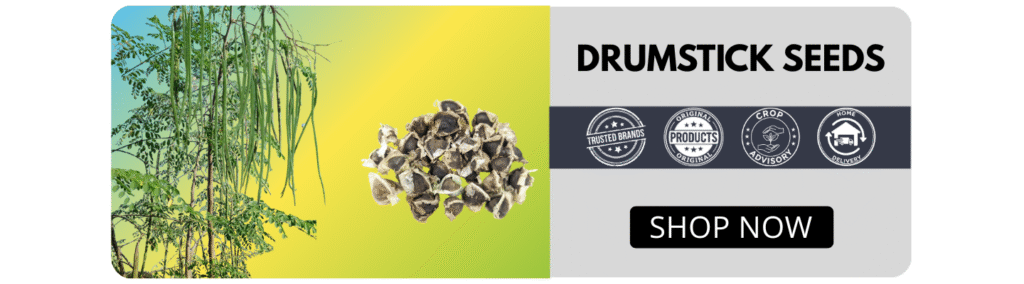
Drumstick (Moringa oleifera) is commonly known as the “Miracle Tree” because almost every part of the plant leaves, pods, flowers, seeds, and roots is highly nutritious and has medicinal or economic value. It is a fast-growing, drought-resistant crop belonging to the Moringaceae family. Native to the Indian subcontinent, it is widely cultivated in tropical and subtropical regions. The crop is grown for its nutritious pods, leaves, flowers, and seeds.
Role of Drumstick in Indian Cuisine
In India, drumstick is widely consumed for its nutritious pods and leaves, which are integral to many traditional dishes. The tender pods are used in curries, sambar, soups, and stews, adding a unique flavor and richness to meals. Drumstick leaves are often cooked as a vegetable, added to dals, or used in salads and chutneys for their high vitamin and protein content. Beyond culinary uses, drumstick seeds are pressed to extract oil, which is used in cooking and cosmetics. Dried leaves and powders are incorporated into health supplements and teas. Its multiple forms fresh, cooked, dried, or powdered make drumsticks a versatile and valuable crop across Indian households and industries.
Role of Drumstick in Global Cuisine
Drumstick (Moringa oleifera) is recognized as a “superfood” and is widely used in tropical and subtropical regions for its nutritional and medicinal properties. Its pods, leaves, and seeds are incorporated into soups, stews, and curries in Southeast Asian, African, and Caribbean cuisines. Drumstick leaves are often dried or powdered and added to teas, smoothies, and health supplements for their rich protein, vitamin, and antioxidant content. Beyond culinary uses, drumstick seed oil and leaf extracts are used in cosmetics, nutraceuticals, and natural health products worldwide. Its versatility, high nutritional value, and medicinal benefits have made drumsticks an important crop in the global health, food, and wellness industries.
Non-Culinary Uses of Drumstick
Apart from its nutritional benefits, drumstick (Moringa oleifera) has several important non-culinary uses. The seeds can be processed to extract oil, known as ben oil, which is used in cosmetics, lubricants, and pharmaceutical products. Drumstick leaves and bark have medicinal properties and are used in traditional remedies for treating inflammation, infections, and digestive disorders. Its fibrous bark and stems are sometimes used for making ropes and paper. Additionally, drumstick trees are planted for soil conservation, erosion control, and as natural fences or windbreaks due to their fast growth and dense canopy. This makes the drumstick tree valuable not only as a food crop but also as a versatile resource for health, industry, and environmental purposes.
Drumstick Farming
Drumstick is a highly rewarding crop for farmers due to its nutritional value, multiple uses, and continuous demand in both domestic and international markets. Its fast growth, drought resistance, and adaptability to a variety of soil types make it suitable for cultivation across tropical and subtropical regions.
Why Drumstick Farming?
- Continuous demand for fresh pods, leaves, powders, and seed oil.
- High yield potential, especially with hybrid and improved varieties.
- Good returns even from small landholdings.
- Strong export potential for high-quality produce.
- Demand from food, nutraceutical, and wellness industries.
Before starting drumstick farming, it is important to select the right seed variety based on factors such as soil type, climate suitability, market demand, and intended purpose whether for fresh consumption, processing, or medicinal products. Choosing the right variety and sowing seeds correctly ensures high germination, better plant growth, and maximum profits.
A few popular drumstick types are listed below.
Popular Drumstick (Moringa) Types
PKM-1 (Periyakulam-1) Moringa
PKM-1 was developed by the Horticultural College and Research Institute in Periyakulam, Tamil Nadu. It is a high-yielding variety that produces long, tender pods, with an average length of around 65–70 cm. It is an annual bush-type drumstick, and flowering starts approximately 90 to 100 days after planting. This variety is suitable for both home gardens and commercial cultivation.
PKM-2 (Periyakulam-2) Moringa
PKM-2 was developed by the Horticultural College and Research Institute in Periyakulam, Tamil Nadu. It is a derivative of a cross between MP 31 and MP 38. The pods are around 120–125 cm long, with approximately 70% flesh. Individual fruit weight is generally around 280 g, and it is suitable for 3–4 ratoons.
Chemmuringa Moringa
Chemmuringa Moringa is a native variety from Kerala, India, known for its slightly bitter but highly nutritious pods. It is grown mainly in home gardens for both pods and leaves. The pods are used in curries and soups, while the leaves are rich in antioxidants and can be used as dietary supplements to support overall health.
Jaffna Moringa
Jaffna Moringa, from Jaffna, Sri Lanka, is a perennial variety producing exceptionally long pods that grow 60–90 cm and can bear fruit year-round. Its pods are popular in local and export markets, while the leaves are used in soups and medicinal preparations, providing protein, vitamins, and essential nutrients.
Chavakacheri Moringa
Chavakacheri Moringa is a medium-length pod variety from Sri Lanka, primarily grown locally. The tender and flavorful pods are used in curries and stir-fries, and the nutrient-rich leaves are used in dietary supplements. This variety is suitable for home gardens and small-scale farming.
Types of Drumstick Plants
Drumstick (Moringa oleifera) is cultivated in two main types: perennial and annual.
Perennial Drumstick
These plants live for several years and are mostly suitable for kitchen gardens or small-scale cultivation. They produce fruits continuously throughout the year.
Annual Drumstick
These are generally planted on a commercial scale for pods and seeds. They complete their life cycle in one year.
Types of Drumstick Seeds
Selecting the right drumstick seeds is the first step toward achieving a healthy crop and high yield. To make the best choice, it is essential to understand the different types of drumstick seeds available in the market. Broadly, drumstick seeds can be categorized into the following types:
F1 Hybrid Drumstick Seeds
F1 hybrid drumstick seeds are developed by cross-breeding parent plants. These seeds generally produce plants that offer higher yields, uniform growth, and consistent pod quality. They are ideal for commercial farmers and large-scale cultivation aiming for maximum productivity and early harvest.
Open-Pollinated (OP) Drumstick Seeds
Open-pollinated drumstick seeds are naturally pollinated through wind, insects, or other natural means. These seeds can be saved and reused for future planting while maintaining similar plant characteristics. They are cost-effective and best suited for small-scale farmers and home gardeners who prefer traditional and sustainable farming practices.
Popular Drumstick Seed Brands
At DesiKheti, you can buy drumstick seeds online from top national and international brands. We offer a wide range of high-quality drumstick seeds to ensure healthy plants, high yields, and superior pod quality for both commercial farmers and home gardeners.
Drumstick seeds from popular companies such as PHS, Sarpan, and Taiyo Seeds are available at DesiKheti.
Explore our collection, order drumstick seeds online, and have them delivered directly to your home.
Buy Drumstick Seeds from various brands at DesiKheti:
PHS Drumstick Seeds | Sarpan Seeds Drumstick Seeds | Taiyo Drumstick Seeds
Popular Drumstick Seed Varieties
Popular PHS drumstick seed varieties available at DesiKheti include Samurai Drumstick Seeds and Dhanush Drumstick Seeds.
Popular Sarpan Seeds drumstick seed varieties available at DesiKheti include Sarpan Drumstick-2 Seeds.
Popular Taiyo Seeds drumstick seed varieties available at DesiKheti include PKM-1 Drumstick Seeds.
Drumstick Seeds in Farming
Drumstick seeds are small, oval, and brown to dark brown in color, with a hard outer coat. They are obtained from mature pods of the drumstick tree. Drumstick seeds generally germinate within 7–14 days, depending on soil quality and moisture levels.
Using high-quality seeds and following proper sowing practices is essential for ensuring strong seedlings, uniform growth, healthy pod production, and higher overall yields.
Importance of Choosing Quality Drumstick Seeds
Seeds play a vital role in drumstick farming, as the success of the entire crop depends on their quality. Selecting the best drumstick seeds ensures healthy plants, higher yields, and superior pod quality. In drumstick cultivation, using high-quality seeds is the foundation for achieving better germination and a good crop.
Drumstick is a valuable crop with multiple uses, and proper care starts with sowing quality seeds. For farmers, investing in premium drumstick seeds is not just an expense but a smart step toward higher productivity, better returns, and long-term profitability.
Why Procure Drumstick Seeds from DesiKheti
At DesiKheti, we understand how crucial genuine seeds are for successful drumstick farming. That’s why our collection features drumstick seeds from trusted and reputed national as well as international sources. Farmers can explore a wide range of popular drumstick seeds suited for different regions, climates, and market preferences. Seeds listed on DesiKheti are authentic, high-quality, and can be delivered to your location.
Browse our drumstick seed collection, choose the varieties you need, and have them delivered directly to your doorstep with just a few clicks. With reliable delivery, a growing range of trusted brands, and a large selection of crops, you can purchase the best seeds at DesiKheti.
Drumstick Seed Sowing Guide
Before sowing, it is important to check whether the drumstick seeds have been pre-treated with chemicals. High-quality hybrid and open-pollinated drumstick seeds are often treated with chemicals beforehand.
If the seeds are not pre-treated, it is recommended to follow expert guidance for seed treatment. Once the seeds are ready, they can be sown.
Time to Sow Drumstick Seeds
Drumstick (Moringa) seeds are typically sown during the Kharif season, between June and July, aligning with the onset of the monsoon rains. In certain areas, the crop is also planted during the Rabi season, from October to November, depending on local climate and soil conditions.
Method of Sowing Drumstick Seeds
The sowing technique for drumstick (Moringa) seeds can vary according to regional practices. In some areas, farmers sow the seeds directly in the field, while in others, seedlings are first raised in nurseries and then transplanted. Depending on local conditions, drumsticks may be planted in rows, pits, or trenches, with spacing adjusted according to the sowing method used.
For transplanted seedlings, they are typically ready for planting about a month after sowing in the nursery. It is also common to raise approximately 100 extra seedlings in the nursery to fill any gaps that may occur in the main field.
Drumstick Seeds in Different Indian Languages
- Telugu: మునగకాయ విత్తనాలు (Munagakaya Viththanaalu)
- Hindi: सहजन के बीज (Sahjan ke Beej)
- Bengali: সজনে বীজ (Sojone Beej)
- Gujarati: સરગવો વાવેતર (Sargavo Vavetar)
- Malayalam: മുരിങ്ങ വിത്തുകൾ (Muringa Vithukal)
- Marathi: शेवगा बियाणे (Shevga Biyane)
- Odia: ସହଜନ ବିଆ (Sahajan Bij)
- Punjabi: ਸਾਜਨਾ ਦੇ ਬੀਜ (Sajna de Beej)
- Tamil: முருங்கை விதைகள் (Murungai Vithaigal)
- Kannada: ಮುರಿಂಗಾ ಬೀಜ (Muringa Beeja)
- Konkani: शेवगा बियाणे (Shevga Biyane)
- Assamese: সহজন বীজ (Sohajan Beej)
- Urdu: سہراںڈی کے بیج (Sahrandi ke Beej)
- Kashmiri: سہراںڈی ہند دانہٕ (Sahrandi Hund Daana)
- Sanskrit: मुरिङ्गासस्य बीजानि (Muringaasya Beejani)
Popular Drumstick Seed Research Centres in India
- Indian Institute of Horticultural Research (IIHR), Bengaluru
- ICAR-Indian Institute of Vegetable Research (IIVR), Varanasi
- ICAR Research Complex for NEH Region, Mizoram Centre
- Tamil Nadu Agricultural University (TNAU), Coimbatore
- Kerala Agricultural University (KAU), Vellanikkara
